
Kohi Café de Especialidad
Valencia
Score: 5/10
The rules are unwritten but consistent: what to order and how often, when to leave, where not to sit, and what actually annoys the staff. Written from the complaints, not from the guesswork.

Order something roughly every ninety minutes, do not take a four-person table alone, do not take calls on speaker, and leave when a queue forms. That is most of it, and following it will make you welcome in almost any cafe in the world.
The rules are unwritten because cafes would rather not police them, and that is worth understanding: a sign saying "no laptops after 12" exists because enough people ignored the unwritten version. Every cafe that has posted rules was pushed into it.
We read public reviews of more than 2,000 cafes to work out which are worth working in, which means also reading a great deal of what staff and other customers say about people working in them. The complaints are remarkably consistent, and mostly not about laptops.
Table maths, first and loudest. One person at a table for four during the lunch rush is the single most-cited annoyance, well ahead of anything about staying too long. A three hour session at a two-top rarely bothers anybody.
Calls on speaker, second. Not calls. Speaker. A person talking quietly into headphones is background noise; a speakerphone is a second conversation everyone has to participate in.
The single-purchase marathon, third. Interestingly, the complaint is almost never about the duration itself. It is about the ratio: four hours and one filter coffee is what gets mentioned, and four hours with three orders almost never does.
Cable across a walkway, fourth, and this one gets the strongest reactions of all, because it is a trip hazard and staff carry hot things.
There is a going rate for occupying a table, and it is more or less an order every ninety minutes. That is not a rule anyone will state, and it is what the arithmetic of a cafe requires: a table has to turn a certain amount per hour for the room to work, and if you are not going to turn it, you cover it.
Even at European prices this comes out far below any coworking day pass. Three coffees over four hours is five to nine euros, and the cheapest day pass in most of these cities is fifteen. We ran the full comparison elsewhere.
Watch the queue, not the clock. A cafe with empty tables does not care how long you stay. The same cafe with people standing does, and the polite move is to notice it before you are asked.
Learn the peaks. Almost everywhere they are the same: a morning rush around eight to nine thirty and a lunch rush from twelve thirty to two. Working through the trough between them and after three in the afternoon is easy nearly everywhere.
Notice what the staff are doing rather than what they say. Wiping a table next to you twice in ten minutes is a message. So is stacking chairs, and so is the coffee machine being stripped and cleaned.
Sitting down before ordering. In much of southern Europe this reads as rude in a way it does not in northern Europe or the United States, and it is the fastest way to start on the wrong foot.
Bringing your own food. Almost universally not fine, and much more resented than laptops.
Asking for the Wi-Fi password before ordering anything. It signals precisely what the staff are afraid of.
Moving furniture. Pulling a second chair over for your bag is a small thing that reads badly, and putting a bag on a chair in a busy room reads worse.
Staying past the last order. If the machine has been cleaned, the session is over regardless of what the door sign says.
Not much, and that is worth saying, because a certain amount of writing on this subject treats cafes as free offices with a coffee surcharge.
A cafe owes you what you paid for: a drink, a seat while you have one, and usually a network. It does not owe you a socket, silence, a four hour lease, or a table shape that suits your laptop. Places that provide all of that are choosing to, and the ones that do it well are the ones worth going back to.

Lisboa · 4.6 · 2453

Lisboa · 4.9 · 35

Santa Maria de Belém · 4.1 · 370
Lisboa · 4.4 · 1113

Lisboa · 4.6 · 286

Lisboa · 4.5 · 96
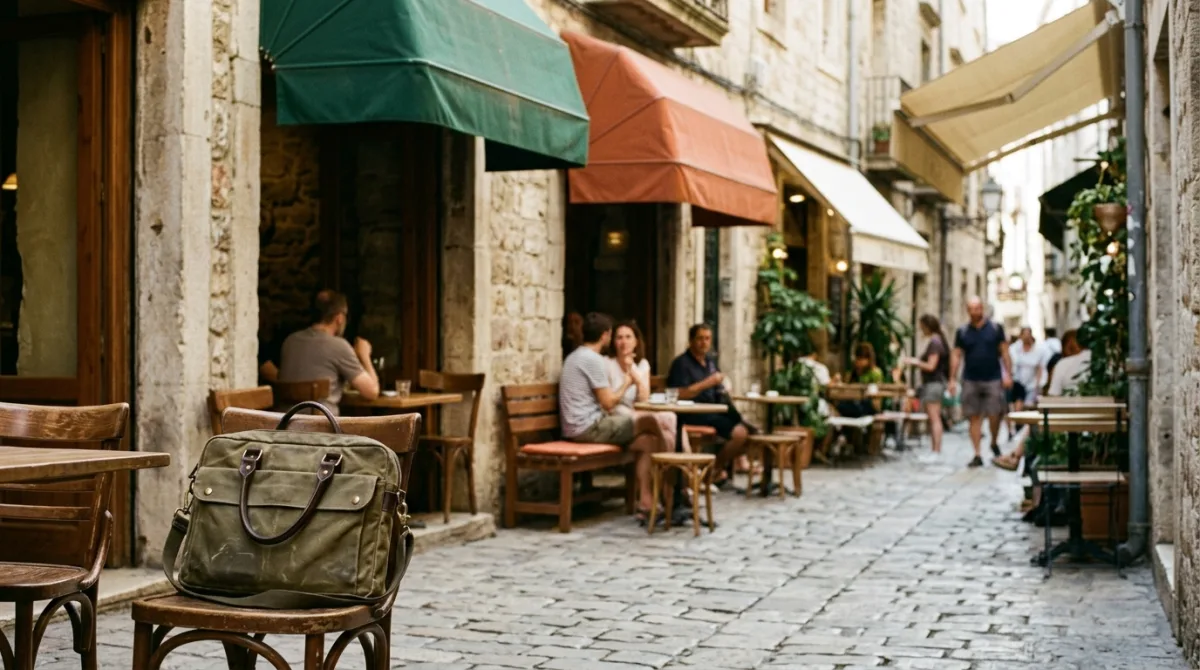
Three cafes in a day works better than one if you match the room to the task. Morning for deep work, afternoon for the shallow stuff, evening for whatever is left, and never more than a ten minute walk between them.
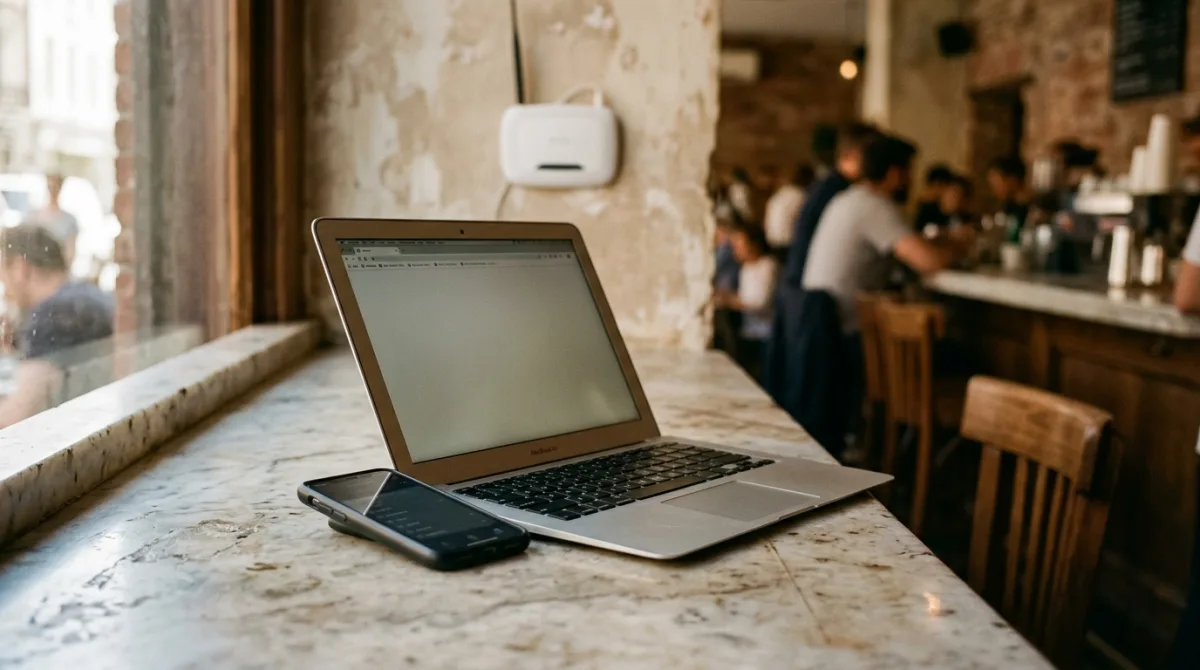
A video call needs about 4 Mbps. Almost every cafe has more than that, which is why blaming bandwidth for a dropped call is usually wrong. What breaks instead, and how to test a connection in thirty seconds.
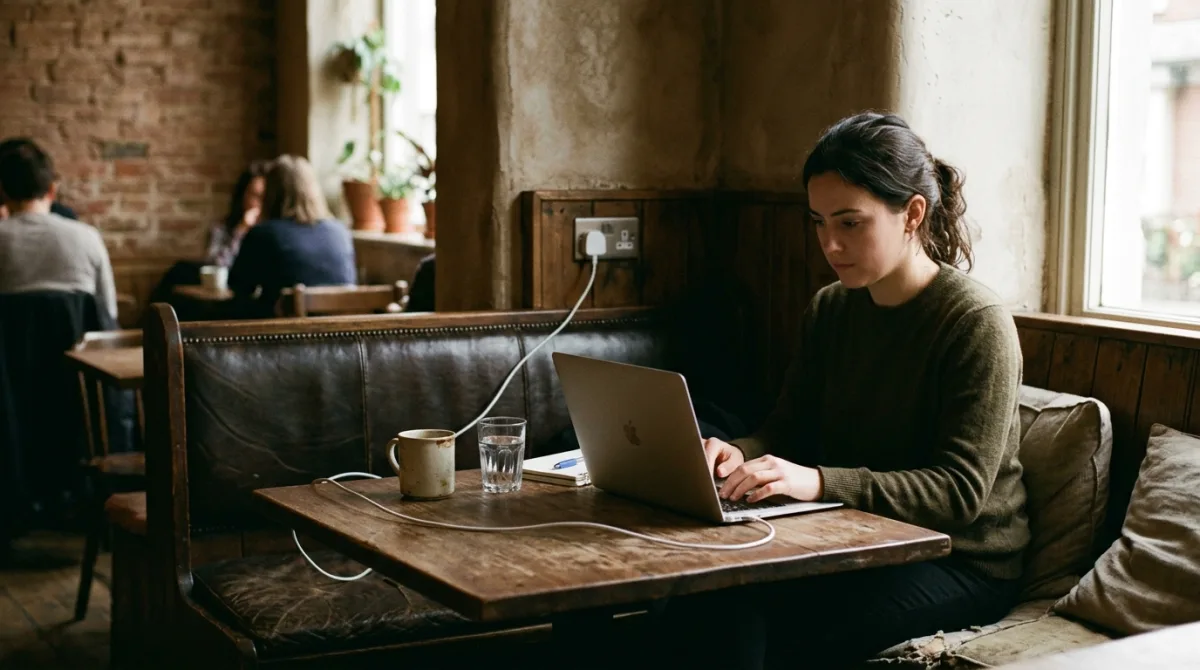
Sockets are the one thing cafe listings almost never record, including ours. Here is what we can and cannot tell you, and the reading tricks that work when the data does not exist.